The vast agricultural landscapes of the eastern borderlands present a sensory experience deeply intertwined with the earliest agricultural chapters of human history. Bordered securely by the snow-covered alpine amphitheater of the Greater Caucasus and nourished by the shifting waters of the Alazani River, this fertile territory has served as a sanctuary for viticulture for thousands of years. Traveling through this lush countryside introduces modern explorers to a peaceful rural rhythm where the landscape is continuously painted with endless rows of green vines, historic stone guard towers, and clay wine cellars that have been utilized across centuries.
Understanding the true identity of this Caucasian nation requires a slow, deliberate journey into its traditional agrarian heartland. Here, the complex act of making and sharing wine is viewed not as a simple commercial industry, but as a sacred cultural inheritance that actively shapes music, literature, family structures, and religious rituals. For international travelers who wish to experience the absolute foundation of local hospitality and explore the oldest continuous winemaking traditions on Earth, booking expertly organized Kakheti wine tours delivers an immersive exploration of historic family estates and modern boutique vineyards.
The Eight-Thousand-Year Ancestry of the Clay Vessel
The Architectural Archetype of the Marani
The sacred center of any traditional rural estate is the marani, a specialized stone wine cellar designed specifically to hold and protect the massive, egg-shaped clay fermentation jars known as qvevris. These enormous vessels are lined with organic beeswax and completely buried deep beneath the earthen floors of the cellar to ensure a perfectly stable, cool temperature throughout the changing seasons. Stepping into the cool dimness of a historic marani reveals a smooth stone floor punctuated only by the circular wooden lids that seal the underground chambers, creating an atmosphere that feels intensely spiritual and unchanging.
The Science and Complexity of Amber Wine
What sets the local viticulture completely apart from Western methodology is the prolonged, natural contact between the fermenting grape juice and the solid skins, seeds, and stalks, collectively referred to as the mother. For traditional white grape varieties like Rkatsiteli or Mtsvane, this extensive skin contact continues underground for up to six months, extracting deep tannins, rich polyphenols, and a striking, brilliant orange hue. The resulting beverage is a complex, robust amber wine that challenges standard definitions, offering a magnificent flavor profile characterized by dried apricots, walnuts, sweet spices, and a clean, bone-dry finish.
The Visual Majesty and Romance of the Border Ramparts
The Italianesque Appeal of Sighnaghi
A striking visual highlight of the eastern route is the picturesque hilltop community of Sighnaghi, sitting proudly on a steep ridge overlooking the vast agricultural valley floor. Often compared to a classic Tuscan village due to its red-tiled roofs, winding cobblestone alleys, and beautifully restored, pastel-colored timber houses, the town possesses a uniquely romantic and artistic energy. Walking through these historic lanes reveals a community that has inspired generations of folk artists, poets, and musicians who have sought to capture its luminous, high-altitude light.
Walking the Longest Defensive Walls in Europe
Encircling the historic core of Sighnaghi is a monumental, late-eighteenth-century fortification wall commissioned by the legendary King Erekle II to shield the surrounding agricultural communities from persistent cross-border raids. Stretching for nearly four kilometers and punctuated by twenty-three heavy stone watchtowers, this imposing structural network remains remarkably intact. Climbing up onto the ancient masonry pathways allows travelers to trace the ridge lines of the hills, taking in spectacular, panoramic vistas of the Alazani Valley against the dramatic, jagged silhouette of the distant mountains.
Spiritual Sanctuaries and Sacred Viticultural Links
The Peaceful Gardens of Bodbe Monastery
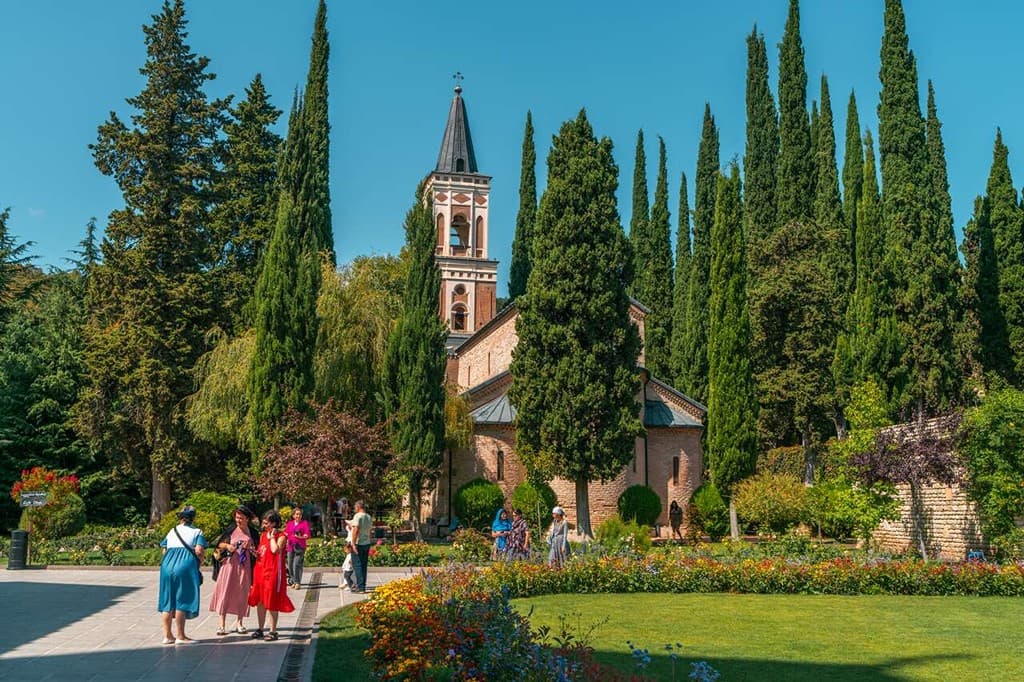
Just a short journey down the forested hillsides from the fortress walls sits the serene estate of the Bodbe Monastic Complex, one of the nation's most important religious and cultural landmarks. Founded originally in the fourth century, this beautiful sanctuary serves as the final resting place and burial site of Saint Nino, the legendary Cappadocian woman who introduced Christianity to the ancient kingdom. The meticulously manicured gardens, lovingly tended by the resident cloistered nuns, are filled with old fruit orchards and blooming rose bushes, offering an intensely peaceful setting for quiet reflection.
The Rebirth of Monastic Agricultural Traditions
Throughout the dark eras of foreign supremacy and secular rule, it was the isolated monastic communities that carefully guarded the secret technical methods and protected the ancient grape varietals from total extinction. Today, a thrilling cultural renaissance is underway as modern monks and nuns systematically revive these historic monastic vineyards, producing limited-edition artistic vintages using ancient scripts and traditional methods. Sampling these rare, spiritually grounded creations provides modern travelers with a direct link to the cultural resilience that has kept this ancient land vibrant through the challenges of history.